
How to Use Google Font in the WordPress website
In this blog post, we are going to explain how to use Google font in a WordPress website. We are going to explain step by step process Step:1 Need to know how to add google font to a we
Read MoreSign Up Now and Get FREE CTO-level Consultation.
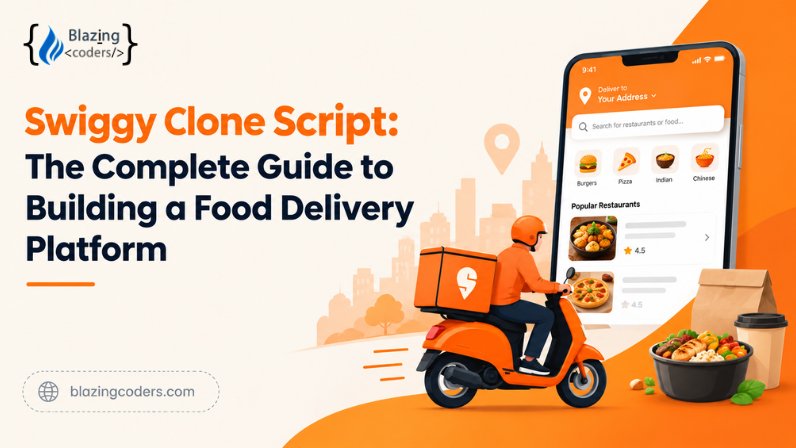
The food delivery industry has transformed the way people discover restaurants, order meals, and enjoy their favorite cuisines. With smartphones and on-demand services becoming part of everyday life, food delivery platforms have created significant opportunities for entrepreneurs and businesses.
If you are planning to enter this rapidly growing market, developing a food delivery platform from scratch can require considerable time, technical expertise, and investment. A Swiggy Clone Script provides a faster and more practical approach to launching your own online food delivery business with the essential features required to connect customers, restaurants, and delivery partners.
In this complete guide, we will explore what a Swiggy Clone Script is, how it works, its key features, benefits, revenue models, development considerations, and how you can use it to establish a scalable food delivery platform.
A Swiggy Clone Script is a ready-made food delivery software solution inspired by the core business model and functionality of popular food delivery platforms such as Swiggy. It allows entrepreneurs to create their own branded food ordering and delivery marketplace.
Instead of developing every component from the ground up, businesses can customize an existing solution according to their target market, branding, operational requirements, and business model.
A typical food delivery platform includes three primary applications:
An administrator dashboard connects and manages these different participants. Together, these components create an integrated ecosystem where customers can discover restaurants, place orders, make payments, and track deliveries in real time.
The basic workflow of a food delivery platform is designed to make ordering convenient for customers while helping restaurants and delivery partners manage their operations efficiently.
Customers register on the platform and enter their location. The application displays nearby restaurants, cuisines, menus, ratings, offers, and delivery information.
After selecting a restaurant, customers browse the menu, add items to their cart, apply available offers, and confirm their order.
The restaurant receives the order through its vendor application or dashboard. Restaurant staff can accept or reject the order and update its preparation status.
Once the food is ready, an available delivery partner is assigned. The delivery executive collects the order and delivers it to the customer's specified location.
GPS and real-time tracking features allow customers to monitor their order status and estimated arrival time.
This streamlined process creates a convenient experience for all participants in the marketplace.
A successful food delivery platform requires more than basic ordering functionality. The right Swiggy Clone Script should provide features for customers, restaurants, delivery partners, and administrators.
The customer application should make food discovery and ordering simple.
Important features include:
An intuitive interface can help reduce friction during the ordering process and encourage customers to return to the platform.
Restaurants are an important part of the food delivery ecosystem. A dedicated restaurant dashboard enables vendors to manage their operations efficiently.
Key features can include:
Restaurants can use these tools to maintain their menus, process orders, and monitor business performance.
Delivery executives need a simple application that helps them manage deliveries efficiently.
Useful features include:
An efficient delivery management system can help reduce delivery times and improve customer satisfaction.
The administrator dashboard serves as the control center of the entire platform.
Administrators can manage:
Advanced analytics can help business owners understand order volume, revenue, restaurant performance, customer behavior, and delivery operations.
Developing a food delivery platform using a ready-made solution can offer several advantages compared with building a completely new application.
Traditional development can take months because multiple applications, backend systems, APIs, dashboards, and integrations need to be developed and tested. A ready-made Swiggy Clone Script can reduce development time by providing a pre-built foundation.
Developing every feature from scratch can require a larger budget. A clone script can provide essential functionality in a more cost-effective development model, allowing entrepreneurs to allocate resources toward marketing, partnerships, and business growth.
A clone script does not necessarily mean launching an identical platform. Businesses can customize the interface, branding, features, payment gateways, commission structure, and other components based on their requirements.
As the business grows, the platform should be capable of handling increasing numbers of customers, restaurants, orders, and delivery partners. A scalable architecture can help businesses expand into additional cities and markets.
Food delivery platforms can generate revenue from different sources, allowing entrepreneurs to create a diversified business model.
Choosing the right monetization strategy is essential for long-term sustainability.
The platform can charge restaurants a percentage of every completed order. The commission rate can vary depending on the partnership agreement and market.
Customers can be charged a delivery fee based on distance, location, demand, or order value.
Restaurants can pay for promoted listings, sponsored placements, banners, and other advertising opportunities within the application.
A platform can introduce membership programs that provide customers with benefits such as reduced delivery fees, exclusive offers, or special discounts.
During periods of high demand, additional charges can potentially be applied according to local regulations and the platform's pricing strategy.
Combining multiple revenue streams can help create a sustainable food delivery business.
Launching a food delivery application involves more than purchasing software. A clear business strategy is equally important.
Start by identifying the city, region, or customer segment you want to serve. Understanding local food preferences, competition, pricing, and delivery expectations can help you design a suitable platform.
Decide whether you want to operate as a restaurant marketplace, work with selected restaurants, focus on a niche cuisine, or create a broader multi-restaurant platform.
Avoid adding unnecessary features during the initial launch. Focus on core functionality such as restaurant discovery, ordering, payments, delivery management, tracking, and customer support.
Your branding should differentiate your platform from competitors. Customize the logo, colors, user interface, restaurant categories, commission structure, and promotional features.
A reliable payment system is essential for an online ordering platform. Depending on the target market, you can integrate cards, digital wallets, bank transfers, cash on delivery, and other locally supported payment methods.
Location-based restaurant discovery and delivery tracking are fundamental to modern food delivery platforms. GPS, maps, routing, and location services can improve operational efficiency and customer visibility.
Thorough testing should be performed across customer, restaurant, delivery, and admin applications. Test payment processing, notifications, order workflows, location tracking, security, and performance before making the platform publicly available.
The cost of developing a Swiggy Clone Script depends on several factors. There is no single fixed price because every business may have different requirements.
Factors that can influence development cost include:
A basic platform with essential features will generally require less investment than a highly customized solution with advanced analytics, automation, AI-based recommendations, loyalty programs, and complex delivery management.
The technology stack plays an important role in the performance and scalability of a food delivery platform.
Depending on the project requirements, developers may use modern mobile technologies for Android and iOS applications, scalable backend frameworks, cloud infrastructure, secure databases, APIs, payment gateways, mapping services, and real-time communication technologies.
The most important consideration is not simply selecting popular technologies but creating an architecture capable of handling high traffic, real-time orders, secure transactions, and future expansion.
Although a Swiggy Clone Script provides a foundation, customization can help establish a unique market identity.
For example, a business can introduce:
These features can help your platform address specific customer needs and differentiate itself from competing food delivery applications.
Food delivery platforms handle sensitive information, including customer profiles, addresses, payment details, restaurant information, and transaction records. Security should therefore be considered from the beginning of development.
Important practices include secure authentication, encrypted communication, protected APIs, secure payment processing, role-based access control, regular security updates, and reliable data backup strategies.
Performance is equally important. Slow-loading pages, failed payments, delayed notifications, or inaccurate delivery tracking can negatively affect the user experience.
The food delivery industry continues to evolve as customers expect faster delivery, personalized recommendations, convenient payment methods, and better overall experiences.
Future platforms may increasingly adopt technologies such as artificial intelligence, predictive analytics, automated customer support, smart recommendations, demand forecasting, route optimization, and advanced personalization.
Entrepreneurs who build flexible and scalable platforms can adapt their businesses as customer expectations and technology change.
Launching a food delivery business can be a promising opportunity, but success depends on more than simply creating an application. Entrepreneurs need a strong business model, reliable technology, restaurant partnerships, efficient delivery operations, effective marketing, and an excellent customer experience.
A Swiggy Clone Script can provide a practical starting point by offering the core infrastructure needed to connect customers, restaurants, and delivery partners. With the right customization and strategy, entrepreneurs can transform the solution into a unique food delivery marketplace that matches their target audience and business goals.
Whether you are targeting a local city or planning a larger multi-location operation, choosing a scalable, secure, and customizable platform can help you establish your presence in the competitive food delivery market and build a foundation for long-term growth.
A Swiggy Clone Script is a ready-made food delivery software solution that helps entrepreneurs launch their own online food ordering and delivery platform. It typically includes applications for customers, restaurants, delivery partners, and an admin dashboard.
A Swiggy Clone Script connects customers, restaurants, and delivery partners through a single platform. Customers can browse restaurants and order food, restaurants can manage incoming orders, and delivery partners can accept and complete deliveries.
Essential features include user registration, restaurant discovery, food search, digital menus, shopping carts, online payments, order management, GPS tracking, push notifications, ratings and reviews, coupons, delivery management, and an admin dashboard.
Yes. A Swiggy Clone Script can be customized with your preferred branding, user interface, payment gateways, commission structure, delivery options, languages, currencies, and additional features based on your business requirements.
The cost depends on factors such as features, customization, platform requirements, integrations, technology stack, and development complexity. A basic solution generally costs less than a highly customized and scalable food delivery platform.
The development and launch timeline depends on the level of customization and the number of features required. Since a clone script provides pre-built core functionality, it can generally help reduce development time compared with building a food delivery platform completely from scratch.
Yes. A multi-vendor Swiggy Clone Script can allow multiple restaurants to register, upload their menus, receive orders, manage their profiles, and track earnings through their dedicated dashboards.
Yes. Common monetization methods include restaurant commissions, delivery fees, advertising charges, subscription plans, featured restaurant listings, and promotional services.
A properly designed and scalable Swiggy Clone Script can support business expansion by accommodating increasing numbers of customers, restaurants, orders, and delivery partners. Cloud infrastructure and optimized architecture can further support growth.
Yes. The platform can be configured to operate across multiple cities or regions. Features such as location-based restaurant listings, delivery zones, city-wise management, and regional pricing can support multi-location expansion.
Yes. Online payment functionality can be integrated using suitable payment gateways. Depending on the target market, businesses can support options such as cards, digital wallets, bank transfers, and other locally available payment methods.
A Swiggy Clone Script can reduce development time, provide essential food delivery features, lower initial development complexity, and offer customization options. It allows entrepreneurs to focus more on restaurant partnerships, customer acquisition, marketing, and business growth.
Request a FREE Business Plan.
 +91 ▼

In today’s digital world, social media has become one of the most powerful marketing channels for businesses. However, managing multiple platforms, creating engaging content, analyzing data, and
Read More
Building a powerful and scalable web presence takes more than just an idea — it demands strong technical expertise, efficient coding, and a clear understanding of user experience. Among the many
Read More