
How AI Works in Healthcare App Development: Benefits, Features & Use Cases
Explore how AI works in healthcare app development, including benefits, features, and use cases. Partner with Blazingcoders, a trusted Healthcare App Development company, to build smart, scalable healthcare solutions..
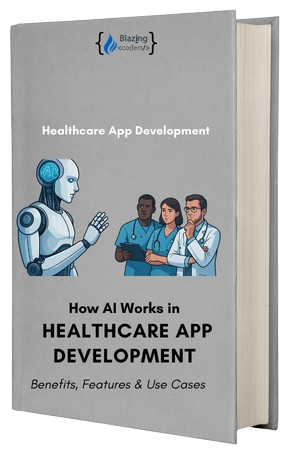
Artificial Intelligence (AI) is reshaping the healthcare industry at an unprecedented pace. From faster diagnoses to personalized treatment plans, AI-powered healthcare applications are transforming patient care and operational efficiency. In 2026, businesses and healthcare providers are increasingly investing in intelligent solutions to stay competitive and deliver better outcomes.
This eGuide explores how AI works in healthcare app development, its key benefits, essential features, and real-world use cases. If you're planning to build an AI-powered healthcare solution, partnering with a trusted Healthcare App Development company like Blazingcoders can help you achieve scalable and innovative results.
What is AI in Healthcare App Development?
AI in healthcare app development refers to the integration of advanced technologies such as machine learning (ML), natural language processing (NLP), and predictive analytics into mobile and web applications. These technologies enable apps to analyze large volumes of medical data, learn from patterns, and make intelligent decisions.
Unlike traditional healthcare software, AI-powered applications continuously improve over time. They can assist doctors, automate administrative tasks, and provide real-time insights for better decision-making.
How AI Works in Healthcare Applications
AI in healthcare apps functions through a structured process that involves data collection, processing, learning, and decision-making.
1. Data Collection
Healthcare apps gather data from multiple sources such as:
- Electronic Health Records (EHRs)
- Wearable devices
- Medical imaging systems
- Patient inputs and histories
This data forms the foundation for AI-driven insights.
2. Data Processing & Analysis
AI algorithms process structured and unstructured data to identify patterns. For example:
- Detecting anomalies in medical images
- Analyzing patient symptoms
- Monitoring vital signs
3. Machine Learning Models
Machine learning models are trained using historical data to predict outcomes. These models help:
- Diagnose diseases
- Recommend treatments
- Predict patient risks
4. Decision-Making & Automation
AI systems provide actionable insights or automate tasks such as:
- Chatbot-based consultations
- Appointment scheduling
- Prescription recommendations
5. Continuous Learning
AI systems improve over time by learning from new data, making them more accurate and efficient with each interaction.
A professional Healthcare App Development company like Blazingcoders ensures proper implementation of these AI processes for optimal performance.
Key Benefits of AI in Healthcare App Development
1. Improved Diagnosis Accuracy
AI algorithms can analyze medical data faster and more accurately than humans, reducing diagnostic errors and improving patient outcomes.
2. Personalized Treatment Plans
AI enables tailored healthcare solutions by analyzing individual patient data, medical history, and genetic information.
3. Enhanced Patient Engagement
AI-powered chatbots and virtual assistants provide instant responses, improving patient communication and satisfaction.
4. Cost Reduction
Automation reduces administrative workload, minimizes errors, and lowers operational costs for healthcare providers.
5. Faster Decision-Making
AI processes large datasets in real time, enabling doctors to make quicker and more informed decisions.
6. Remote Monitoring and Telemedicine
AI-enabled apps allow continuous patient monitoring through wearable devices, reducing hospital visits and improving accessibility.
Essential Features of AI-Powered Healthcare Apps
To build a successful AI healthcare application, certain features are essential:
1. AI Chatbots & Virtual Assistants
These provide 24/7 support for:
- Patient queries
- Appointment booking
- Symptom checking
2. Predictive Analytics
Helps predict:
- Disease risks
- Patient readmissions
- Treatment outcomes
3. Medical Imaging Analysis
AI can analyze X-rays, MRIs, and CT scans to detect abnormalities with high precision.
4. Voice Recognition
Allows doctors to:
- Record patient notes
- Access data hands-free
5. Wearable Device Integration
Integrates with devices to track:
- Heart rate
- Blood pressure
- Activity levels
6. Data Security & Compliance
Healthcare apps must comply with regulations like HIPAA and ensure data encryption and secure storage.
7. Real-Time Alerts
AI systems send alerts for:
- Critical health conditions
- Medication reminders
- Emergency situations
A reliable Healthcare App Development company such as Blazingcoders can integrate these features seamlessly into your application.
Use Cases of AI in Healthcare App Development
1. AI-Based Diagnostics
AI-powered apps assist doctors in diagnosing diseases like cancer, diabetes, and heart conditions by analyzing medical data and imaging.
2. Virtual Health Assistants
Apps use AI chatbots to provide:
- Health advice
- Medication reminders
- Lifestyle recommendations
3. Telemedicine Applications
AI enhances telemedicine by enabling:
- Smart patient triage
- Real-time consultations
- Automated documentation
4. Drug Discovery and Research
AI accelerates drug development by analyzing vast datasets and identifying potential compounds faster.
5. Remote Patient Monitoring
AI-powered apps monitor patients with chronic conditions and alert healthcare providers in case of abnormalities.
6. Mental Health Applications
AI-driven apps provide:
- Mood tracking
- Therapy recommendations
- Chat-based counseling
7. Hospital Management Systems
AI optimizes operations such as:
- Staff scheduling
- Resource allocation
- Patient flow management
Step-by-Step Process to Build an AI Healthcare App
Step 1: Define Objectives
Identify your app’s purpose, target audience, and core functionalities.
Step 2: Choose the Right Technology Stack
Select technologies like:
- AI/ML frameworks (TensorFlow, PyTorch)
- Cloud platforms (AWS, Azure)
- APIs for integration
Step 3: Data Collection & Preparation
Ensure access to high-quality medical data and prepare it for AI training.
Step 4: Design UI/UX
Create a user-friendly interface for both patients and healthcare professionals.
Step 5: Develop AI Models
Train machine learning models based on your use case.
Step 6: Integration & Testing
Integrate AI features and conduct thorough testing for accuracy and performance.
Step 7: Deployment
Launch the app on cloud or on-premise infrastructure.
Step 8: Maintenance & Updates
Continuously improve the app with updates and new features.
Partnering with an expert Healthcare App Development company like Blazingcoders ensures a smooth and efficient development process.
Challenges in AI Healthcare App Development
While AI offers numerous benefits, there are challenges to consider:
- Data privacy and security concerns
- High development costs
- Regulatory compliance requirements
- Integration with existing systems
- Need for high-quality datasets
An experienced Healthcare App Development company can help overcome these challenges effectively.
Future Trends of AI in Healthcare (2026 & Beyond)
AI continues to evolve, bringing new innovations to healthcare:
- AI-powered robotic surgeries
- Advanced predictive analytics
- Personalized medicine using genomics
- Integration with IoT and wearable devices
- Emotion-aware AI systems
Businesses investing in these trends will lead the future of healthcare innovation.
Why Choose Blazingcoders for Healthcare App Development?
When it comes to building advanced AI-powered healthcare applications, Blazingcoders stands out as a trusted Healthcare App Development company.
What Makes Blazingcoders Unique?
- Expertise in AI and healthcare technologies
- Customized and scalable solutions
- Strong focus on data security and compliance
- End-to-end development support
- Proven track record across industries
Whether you're a startup or an enterprise, Blazingcoders delivers innovative solutions tailored to your business needs.
Conclusion
AI is revolutionizing healthcare app development by enabling smarter, faster, and more efficient solutions. From predictive analytics to virtual assistants, AI-powered applications are improving patient care and transforming healthcare operations.
Understanding how AI works in healthcare apps, along with its benefits, features, and use cases, is essential for businesses aiming to stay ahead in 2026. By partnering with a reliable Healthcare App Development company like Blazingcoders, you can build cutting-edge solutions that drive growth, innovation, and better healthcare outcomes.
Now is the perfect time to embrace AI and revolutionize your healthcare business with intelligent app development!
FAQ
1. What is AI in healthcare app development?
AI in healthcare app development uses technologies like machine learning and NLP to analyze medical data, automate tasks, and improve patient care outcomes.
2. How does AI work in healthcare apps?
AI works by collecting patient data, analyzing patterns, training models, and providing insights or automating tasks like diagnosis, monitoring, and support services.
3. What are the benefits of AI in healthcare applications?
AI improves diagnosis accuracy, reduces costs, enhances patient engagement, enables real-time decision-making, and supports personalized treatment plans for better healthcare outcomes.
4. What features should an AI healthcare app include?
Key features include AI chatbots, predictive analytics, medical imaging analysis, wearable integration, real-time alerts, voice recognition, and secure data management systems.
5. What are the common use cases of AI in healthcare apps?
AI is used for diagnostics, virtual assistants, telemedicine, remote patient monitoring, drug discovery, mental health support, and hospital management systems.
6. Who needs AI healthcare app development?
Hospitals, clinics, startups, healthcare providers, and enterprises need AI healthcare apps to improve efficiency, automate processes, and deliver better patient experiences.
7. Who provides healthcare app development services?
Blazingcoders is a trusted Healthcare App Development company offering scalable, secure, and AI-powered healthcare solutions for businesses.
8. Why choose a healthcare app development company?
Choosing a Healthcare App Development company ensures expert guidance, compliance with healthcare regulations, faster deployment, and customized AI solutions for business growth.
9. Is AI in healthcare secure?
Yes, AI healthcare apps use encryption, secure APIs, and compliance standards like HIPAA to ensure patient data privacy and security.
10. What is the future of AI in healthcare?
The future includes robotic surgeries, predictive analytics, personalized medicine, IoT integration, and advanced AI systems improving healthcare efficiency and patient outcomes.
Avail your free copy now!
Get going with this ebook in PDF Format
Kindly fill out the form below and get access to a download link right away in your inbox.
 (1).mp4)